

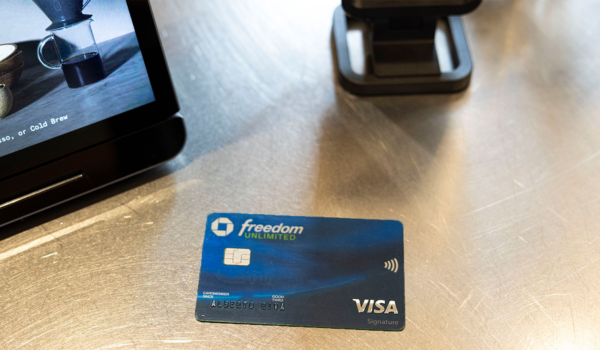
If you are comparing everyday rewards cards in the United States, Chase Freedom Unlimited deserves a close look because it mixes a no annual fee structure with solid cash back categories and a real intro APR window. The current public offer includes a $250 bonus after $500 in purchases within 3 months, plus 0% intro APR for 15 months on purchases and balance transfers. After that, the regular variable APR is 18.24% to 27.74%, and balance transfer fees apply.
That combination gives the card broader appeal than many basic rewards products. It can work for someone who wants simple cash back, occasional travel value, and short-term breathing room on a planned purchase. At the same time, it is important to be clear about what this product is not. This is a revolving credit card, not a personal loan or fixed installment offer. So if you are weighing fixed monthly payments vs. variable APR options, this card falls on the variable side once the intro period ends.
Why many Americans choose this card
The main reason this card keeps showing up in comparisons is its reward structure. Chase currently lists 5% cash back on travel purchased through Chase Travel, 3% on dining, 3% on drugstore purchases, and 1.5% on all other purchases. That setup can be more useful than a plain flat-rate card for people who eat out often, pick up prescriptions, or book a few trips each year.
It also appeals to people who do not want rotating categories. You do not need to track quarterly activation calendars, and you still earn more than 1% outside a few special buckets. In a market full of category complexity, that simplicity has real value.
Its biggest strengths are easy to spot:
- $0 annual fee.
- A welcome bonus with a relatively low spending requirement.
- A 15-month intro APR period.
- Elevated rewards on dining and drugstores.
- Straightforward 1.5% cash back on general purchases.
Even so, there are tradeoffs. Once the introductory APR expires, the interest rate becomes expensive for anyone who carries a balance. So people searching for rates from 3.99% APR should treat that as a sign to compare loan products or special financing offers, not a mainstream rewards credit card. Therefore, this card fits best when you want rewards and plan to pay your statement in full most months.

Chase Freedom Unlimited
Minimum required credit score and approval profile
Chase does not publish an official score cutoff for this card. However, Chase’s own educational guidance says a score around 700+ may help with many rewards cards, while good credit generally starts in the high 600s depending on the scoring model used. That means the realistic answer to What score do I need to qualify? is usually this: your odds often look stronger once you reach the upper 600s, and they usually improve more above 700.
Still, approval is never about score alone. Issuers also review your income, debt load, recent credit activity, payment history, and the overall shape of your file. A person with a decent score but heavy balances can look weaker than someone with a slightly lower score and cleaner utilization. That is why approval conversations need context, not just one number.
In practical terms, the strongest applicant profile usually includes:
- Good credit or better.
- Low recent delinquency activity.
- Sensible credit utilization.
- Income that supports repayment.
- Limited recent hard inquiries.
Do you need a traditional job to apply
No, not always. In the U.S. card market, issuers care more about your ability to repay than whether you receive a classic W2 paycheck. That means a credit card for self-employed or 1099 workers is absolutely possible if your income is steady enough and your broader profile is solid. Chase’s educational content makes clear that employment status can include self-employed applicants, and that reality matters for freelancers, contractors, and gig workers.
So the better question is not “Do I need to be employed?” but “Can I document enough income and present a stable credit profile?” A self-employed person with manageable debt and a clean recent payment history can be a stronger candidate than someone with a regular job and a stressed credit file. Because of that, accuracy matters more than job label. Report your income honestly and make sure the rest of the application supports your case.
How to improve your chances before applying
Preparation can raise your odds more than people expect. First, lower your utilization before your next statement closes so your reported balances look cleaner. Next, avoid submitting several applications in a short period. Chase also offers a pre-approval tool, which lets you check certain offers without affecting your credit score before a full application.
The most practical moves are these:
- Check for a pre-approved offer first.
- Pay down existing card balances.
- Avoid opening multiple new accounts at once.
- Make sure your reported income is current.
- Review your credit reports for obvious errors.
A few less obvious tactics can help too. If you already bank with Chase, that relationship may make parts of your profile easier to verify, even though it does not guarantee approval. Timing also matters. Applying right after a large balance reports can make your file look tighter than it really is. Applying after that balance drops can present a healthier picture.
You may also hear edge-case stories about someone with a very weak profile getting approved. Those cases happen, but they should not drive your strategy. For a card like this, exceptions are not the same as realistic odds. Therefore, the smarter approach is to improve your file first rather than gamble on an optimistic application.
How to apply for Chase Freedom Unlimited
The simplest path is online. Start by checking whether Chase shows a pre-approved offer for you. If it does, review the pricing and reward terms carefully. Then move forward only if the card fits your spending habits and you have a plan for the balance after the intro APR window ends. Chase states that checking certain offers does not affect your credit score, while a full application may generate a hard inquiry.
The process itself is straightforward:
- Enter your legal identity details.
- Provide your gross annual income.
- Confirm your housing and employment information.
- Review the APR, fees, and rewards terms.
- Submit the application and wait for the decision.
This is also where many shoppers overlook the small traps in the market. The welcome bonus can look exciting, but the long-term value depends more on how you use the card than on the first three months. If you revolve a balance after the intro APR period, the interest can reduce much of the benefit you earned from rewards. Therefore, the best use case is simple: treat the card as a rewards tool, not a long-term borrowing solution.
Comparison with two realistic alternatives
What really works
The Chase Freedom Unlimited is the strongest fit in this comparison for people with mixed everyday spending, especially if dining and drugstores are regular categories. That gives it a broader lifestyle angle than Capital One Quicksilver, which leans more on simplicity, and Citi Double Cash, which is better for flat-rate cash back. Its advantage is not that it does one thing only, but that it covers several common spending habits well.
The Chase Freedom Unlimited leads this group on accessibility because it offers $250 after $500 in 3 months. That is more generous than the $200 offers from both competitors, while also requiring a lower spending threshold than Citi Double Cash. Capital One Quicksilver matches the easier spending requirement, but Chase still comes out ahead because the payout is higher.
The Chase Freedom Unlimited is the most layered rewards option in this comparison. It offers 5% through Chase Travel, 3% on dining, 3% at drugstores, and 1.5% on other purchases, which gives it more upside than Quicksilver for category spending. Citi Double Cash is stronger for flat cash back at 2% total, so Chase does not lead for pure simplicity, but it offers more ways to outperform when spending patterns align with its categories.
The Chase Freedom Unlimited stays competitive here with 0% intro APR for 15 months, matching Capital One Quicksilver. Citi Double Cash does not show a comparable intro APR in the data provided and instead points users to current issuer terms. That keeps Chase in a strong position for buyers who want short-term financing flexibility without paying an annual fee.
The Chase Freedom Unlimited is the best overall option in this comparison for users who want strong rewards variety, an easy welcome bonus path, and no annual fee. Citi Double Cash is better for people who care most about flat-rate cash back, and Quicksilver is easier to understand at a glance. Even so, Chase stands out as the most versatile product here because it combines category strength, a solid intro APR period, and the best welcome offer in the table.
The list shows that these cards solve slightly different problems. Quicksilver is better for people who want one simple rate on nearly everything. Citi Double Cash is attractive for disciplined users who always pay and want a stronger flat return. Chase Freedom Unlimited sits in the middle, offering more useful bonus categories than Quicksilver while staying simpler than cards that rely on rotating activations.
Can you get approved with bad credit or negative marks
Maybe, but the odds are weaker. If your report includes recent collections, major delinquencies, or very low scores, this becomes a tougher target. That is because this card is generally aimed at people with stronger credit profiles than starter or rebuilding products. So if your file is under pressure, applying too early can cost you a hard inquiry without much upside.
A better plan is often to lower utilization, avoid new inquiries, build more positive payment history, and revisit the application later. That route is slower, but it usually saves frustration and protects your credit profile more effectively. In many cases, timing is the difference between a denial and a much stronger application a few months later.
Alternatives if this card does not approve you
A rejection does not mean you are out of options. Sometimes it simply means your profile is not ready for this product yet. In that case, a fair-credit or credit-building card can be a smarter stepping stone. Capital One also markets card options for different credit levels, while Chase highlights newer products within its broader lineup that may be better suited for credit-building paths.
A practical fallback plan looks like this:
- Move to a simpler credit-building card.
- Keep utilization low for several billing cycles.
- Stop stacking applications.
- Pay every account on time.
- Recheck pre-approval tools later.
Choose Chase Freedom Unlimited based on fit, not hype
For U.S. readers who want no annual fee rewards, useful dining and drugstore earnings, and a real intro APR period, this card remains a strong option. It works best for people with good credit, stable income, and a habit of paying on time. If that sounds like your profile, the current offer is competitive. If not, compare carefully, improve your numbers, and apply when your odds are stronger. That strategy usually saves more money than chasing a welcome bonus too early.
Chase Freedom Unlimited

 Capital One Venture Rewards review for Americans who want travel miles without a confusing rewards system <p class='sec-title' style='line-height: normal; font-weight: normal;font-size: 16px !important; text-align: left;margin-top: 8px;margin-bottom: 0px !important;'>Capital One Venture Rewards offers flat miles, travel perks, and flexible value. See fees, APR, approval tips, and alternatives for your profile.</p>
  Citi Double Cash® Card review for Americans who want simple, steady cash back <p class='sec-title' style='line-height: normal; font-weight: normal;font-size: 16px !important; text-align: left;margin-top: 8px;margin-bottom: 0px !important;'>Citi Double Cash Card offers no annual fee, solid cash back, and a long intro balance transfer APR. See fees, approval tips, and alternatives.</p>