
The Surge® Mastercard® is designed for U.S. consumers who may have less-than-perfect credit and need a possible way back into the credit system. It can appeal to people who want an unsecured card, monthly credit bureau reporting, and a pre-qualification process before moving into a full application.
However, this card deserves a careful review before applying. It may offer access when traditional cards feel out of reach, but the cost can be high. Therefore, the smartest approach is to compare fees, APR, available credit, and cheaper credit-building alternatives before accepting an offer.
Why choose this credit card
The main reason to consider Surge® Mastercard® is access. Many prime credit cards from Chase, Citi, American Express, and Discover usually require stronger credit. Surge® Mastercard® is positioned for applicants with imperfect credit, which can make it more approachable for rebuilding.
Another benefit is the pre-qualification process. Checking for an offer may help you understand potential eligibility before submitting a full application. That can be useful for people trying to avoid unnecessary hard inquiries.
The card also reports monthly to the three major credit bureaus. This matters because payment history can help rebuild credit when the cardholder pays on time and keeps balances low. In addition, Mastercard acceptance makes the card usable at many merchants in the U.S.
Surge® Mastercard® may help users who want:
- A card for rebuilding credit
- Pre-qualification before applying
- Monthly reporting to major credit bureaus
- Mastercard Zero Liability Protection
- An initial credit limit from $300 to $1,000
Even so, the card is not a rewards product. It should be treated as a short-term credit-building tool, not a long-term card for cash back or travel perks.
Requirements for approval
The Minimum required credit score is not listed as one public guaranteed number. Since Surge® Mastercard® targets people with less-than-perfect credit, approval standards may be more flexible than premium cards.
Still, approval is not automatic. The issuer may review identity, income, debt, recent credit activity, credit history, and ability to manage payments. So, even a card for rebuilding credit requires a responsible application profile.
The question What score do I need to qualify? depends on the full picture. A low score may not automatically prevent consideration, but recent delinquencies, unpaid collections, and unstable income can still hurt the application.
A credit card for self-employed or 1099 workers can be possible when the applicant reports eligible income honestly. For example, a self-employed customer with a 420 score may have more realistic odds with this type of subprime card than with Citi Double Cash® Card or Chase Sapphire Preferred. However, approval still depends on income, identity, debt, and issuer rules.
Applicants should prepare:
- Full legal name and U.S. residential address
- Social Security number or eligible tax identification
- Date of birth
- Annual income
- Employment or income source
- Monthly housing payment
- Email and phone number
- Bank account information, when requested
How to increase approval chances
Start with pre-qualification when available. This can help you see whether an offer may be available before completing the full application. However, always read the final terms because pre-qualification does not guarantee approval.
Next, review your credit reports. Errors, duplicate collections, incorrect balances, or outdated negative items can make approval harder. Checking reports from Experian, Equifax, and TransUnion can help you spot issues early.
Then, reduce existing balances if possible. High utilization can make even a rebuilding application look risky. In addition, lower balances can make monthly payments easier once the new card opens.
More advanced applicants should calculate first-year cost before accepting. Annual fees, monthly maintenance fees, and optional service fees can reduce the value of the available credit. Because of that, the card may cost more than a secured option.
Also, plan a low-use strategy. With a $300 to $1,000 limit, small balances can affect utilization quickly. Charging one predictable bill and paying early can be more effective than using the card heavily.
How to apply for the card
You can begin through the official Surge® Mastercard® site or its pre-qualification page. Before applying, review the pricing terms, APR, annual fee, maintenance fee, and optional charges.
The application usually follows this flow:
- Check whether you pre-qualify
- Review the available offer and fees
- Confirm APR and credit limit details
- Enter personal and income information
- Submit the official application
- Wait for approval or additional review
- Activate the card if approved
- Use it only for planned small purchases
After approval, the goal should be controlled credit activity. The card can help only when payments are on time and balances stay low. If fees or interest create pressure, the rebuilding plan can backfire.
Fixed monthly payments vs. variable APR options
Surge® Mastercard® is a revolving credit card, not an installment loan. This means the balance can carry month to month, and interest can become expensive when the user pays only the minimum.
The phrase Fixed monthly payments vs. variable APR options matters because many applicants compare credit cards with loans. A fixed-payment loan has a set payoff schedule. A credit card balance can remain open longer and cost more over time.
Be careful with ads mentioning Rates from 3.99% APR. Those rates usually apply to auto loans, promotional financing, or secured lending. They should not be compared with a subprime credit card APR.
Also, Financing options with low down payment usually apply to vehicles, furniture, appliances, or installment plans. Surge® Mastercard® is better understood as a credit access product, not a low-cost financing option.
FAQ about Surge® Mastercard®
Can I be approved with bad credit?
Possibly, but approval is not guaranteed. Surge® Mastercard® is marketed to people with less-than-perfect credit. Still, income, identity, debt, and recent negative marks can affect the final decision.
What minimum score is accepted?
There is no single published cutoff. The card may be more accessible than many mainstream cards, but the full profile matters. Pre-qualification can help estimate potential eligibility before applying.
Do I need to be employed?
Traditional employment may not be required in every case. Self-employed workers, contractors, gig workers, and 1099 applicants may apply with eligible income. The income should be accurate and support repayment.
Does Surge® Mastercard® require a security deposit?
Surge® Mastercard® is commonly positioned as an unsecured card, so it may not require a refundable security deposit. However, applicants should review the specific offer terms before accepting.
Does Surge® Mastercard® offer rewards?
No, rewards are not the main focus. The card is mainly designed for credit access and reporting. If rewards matter, compare secured cards from Discover or Bank of America.
Little-known tips before applying
One useful tip is to compare fees with a secured card deposit. A secured card deposit may be refundable, while card fees usually are not. Therefore, an unsecured card can still be more expensive over time.
Another important detail is available credit after fees. If fees post to the account, your usable credit may feel lower than the stated limit. This can also raise reported utilization quickly.
You should also avoid cash advances unless absolutely necessary. Cash advances can include fees and interest that begins fast. For a rebuilding card, that can create expensive debt.
Finally, treat the card as temporary. Use it to build payment history, then look for a lower-cost card once your credit improves. Keeping an expensive card forever may not support long-term financial health.
Alternatives if you are not approved
If you are not approved, avoid submitting several similar applications immediately. Multiple hard inquiries can make your credit file look riskier.
For secured alternatives, compare Discover it Secured, Capital One Platinum Secured, BankAmericard Secured, and U.S. Bank Secured Visa. These cards may require deposits, but they can sometimes cost less over time.
Credit unions can also be useful. Many local credit unions offer starter cards, secured loans, or credit-building products with more personalized reviews.
If unpaid collections are the biggest issue, address those first. A new card can help only when payments stay on time and balances remain low.
Use Surge® Mastercard® only if the rebuilding value beats the cost
The Surge® Mastercard® can offer a path for consumers who need credit access and want reporting to major credit bureaus. It may be useful when mainstream cards are out of reach and a secured deposit is difficult.
However, the card’s cost must make sense. Compare the APR, annual fee, monthly maintenance fee, available credit, and lower-cost secured cards before accepting. The best rebuilding tool is the one that supports your score without creating new financial stress.
Apply with Surge now
When you click, you will be redirected to a new website

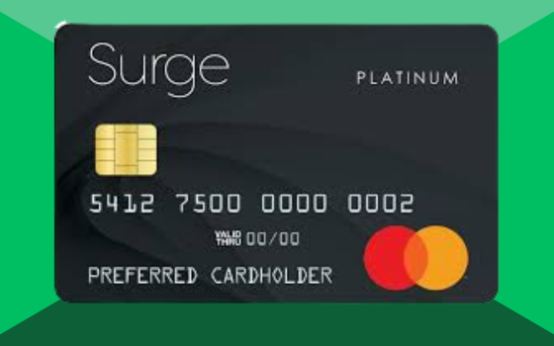 How to apply for the Surge® Mastercard® and rebuild credit without ignoring the fees <p class='sec-title' style='line-height: normal; font-weight: normal;font-size: 16px !important; text-align: left;margin-top: 8px;margin-bottom: 0px !important;'>See how Surge Mastercard works, including approval requirements, APR, fees, credit reporting, drawbacks and lower-cost card alternatives.</p>
  How to get the Serve® Pay As You Go Visa® and control spending without a credit check <p class='sec-title' style='line-height: normal; font-weight: normal;font-size: 16px !important; text-align: left;margin-top: 8px;margin-bottom: 0px !important;'>See how Serve Pay As You Go Visa works, including no credit check access, prepaid benefits, fees, drawbacks and smart alternatives.</p>
  How to apply for the FIT™ Mastercard® and rebuild credit without missing the real costs <p class='sec-title' style='line-height: normal; font-weight: normal;font-size: 16px !important; text-align: left;margin-top: 8px;margin-bottom: 0px !important;'>See how FIT Mastercard works, including approval requirements, fees, APR, credit reporting, drawbacks and lower-cost card alternatives.</p>